

-
-
-
-
-
-
-
-
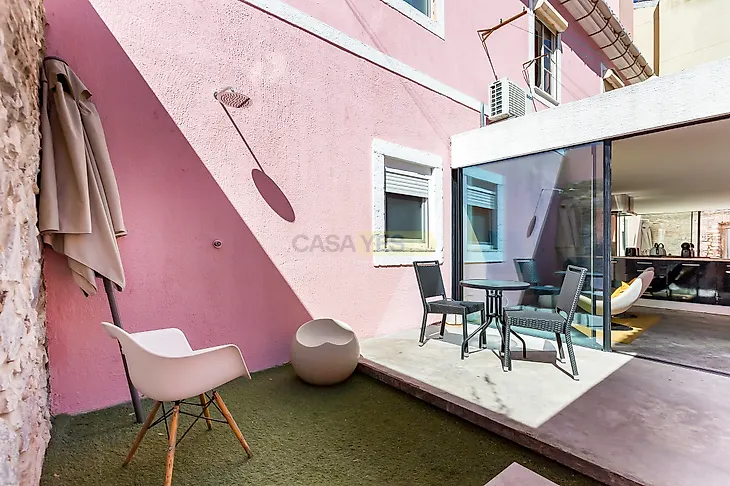
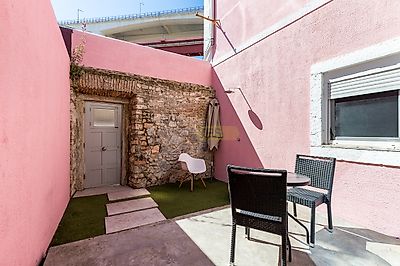
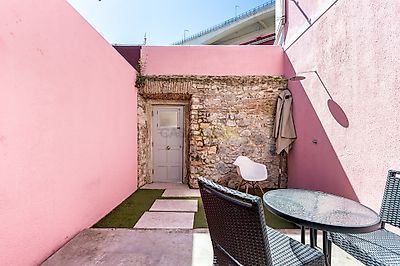
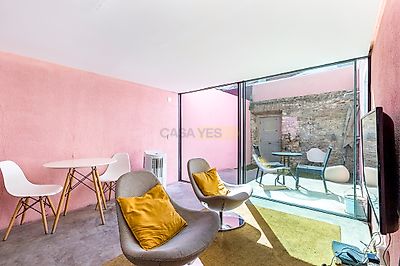
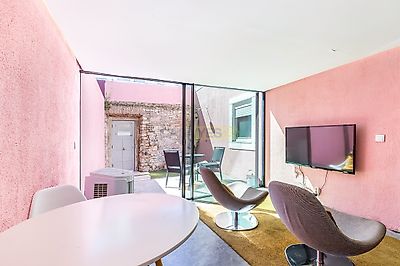

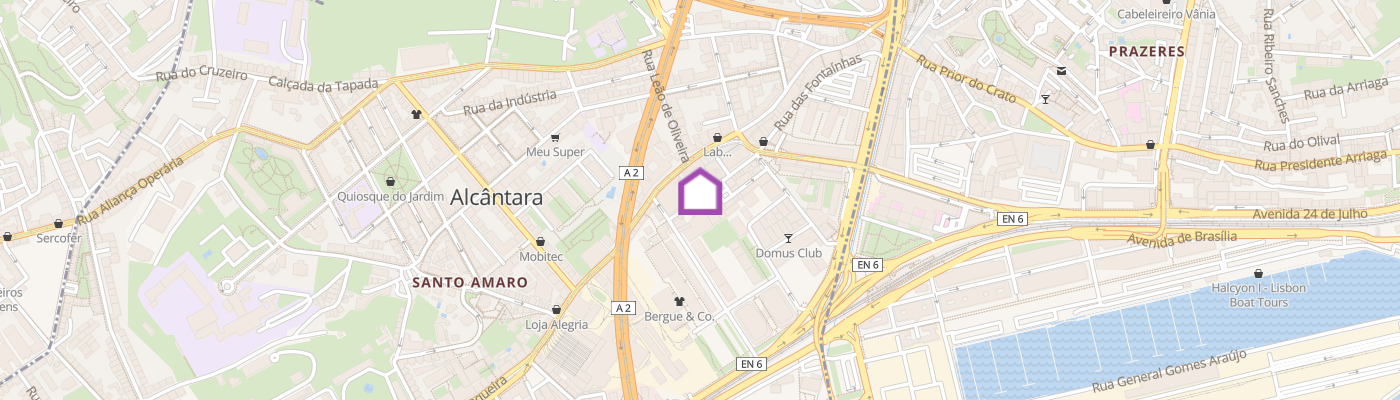
Furnished one-bedroom apartment located near Calvário, one of the busiest areas in Lisbon, across from LX Factory and close to the Docas. This apartment, with a gross private area of 40 m², is located on the ground floor of an older building. It includes a living room (17 m²) with a kitchenette, a bedroom (12 m²), a bathroom (5 m²), and a patio (15 m²). This property has plenty of natural light in the living room, which opens onto the patio. Features: -Pre-owned property -West-facing -Stone walls in the bedroom -Fully equipped kitchen -A patio with a concrete section and another section with artificial grass and a shower -Double-glazed windows -Two entrances (one through the building and one through the patio) -Wooden floors -Air conditioning Overlooking the banks of the Tagus, Alcântara is today a parish covering an area of 4.39 km2 with a population of 13,911 people. The parish was created on 8 April 1770, under the name of S. Pedro in Alcântara, when the parish of S. Pedro in Alfama was transferred to this area. Frequently associated with the Arabic term 'Alquantãrã', meaning 'the bridge', the toponymy immediately refers to the existence of a bridge over the Alcântara stream, which has since disappeared. A place of hills and valleys, Alcântara once had natural resources along the banks of the stream and fertile lands that allowed for rich and varied agriculture, with many vegetable gardens in the alluvial valleys, vineyards and cereals, as well as limestone quarries with lime kilns. These conditions led to these lands beginning to be occupied during the Muslim occupation, although in a dispersed manner. However, it was from the 18th century onwards that Alcântara began to develop an urban occupation, coinciding with the creation of the parish. The industrial buildings from the late 19th century, which so strongly marked the lives of Alcântara's residents in the early decades of the 20th century, were eventually abandoned. The industrialisation process experienced by Alcântara in the second half of the 19th century gave way, a hundred years later, to the reverse process and a profound social transformation, with many of these buildings now converted into residential and business properties.
Additional link:https://www.quintelaepenalva.pt/imovel/?rid=25426189